
- Introduction: UAE’s Most Famous Ghost Town
- Origins: The Pearl Diving Village
- The Great Abandonment
- Unique Architecture
- Ghost Stories
- Modern Status & Tourism
- Visiting Al Jazirah Al Hamra
- FAQs
- Conclusion
Introduction: UAE’s Most Famous Ghost Town
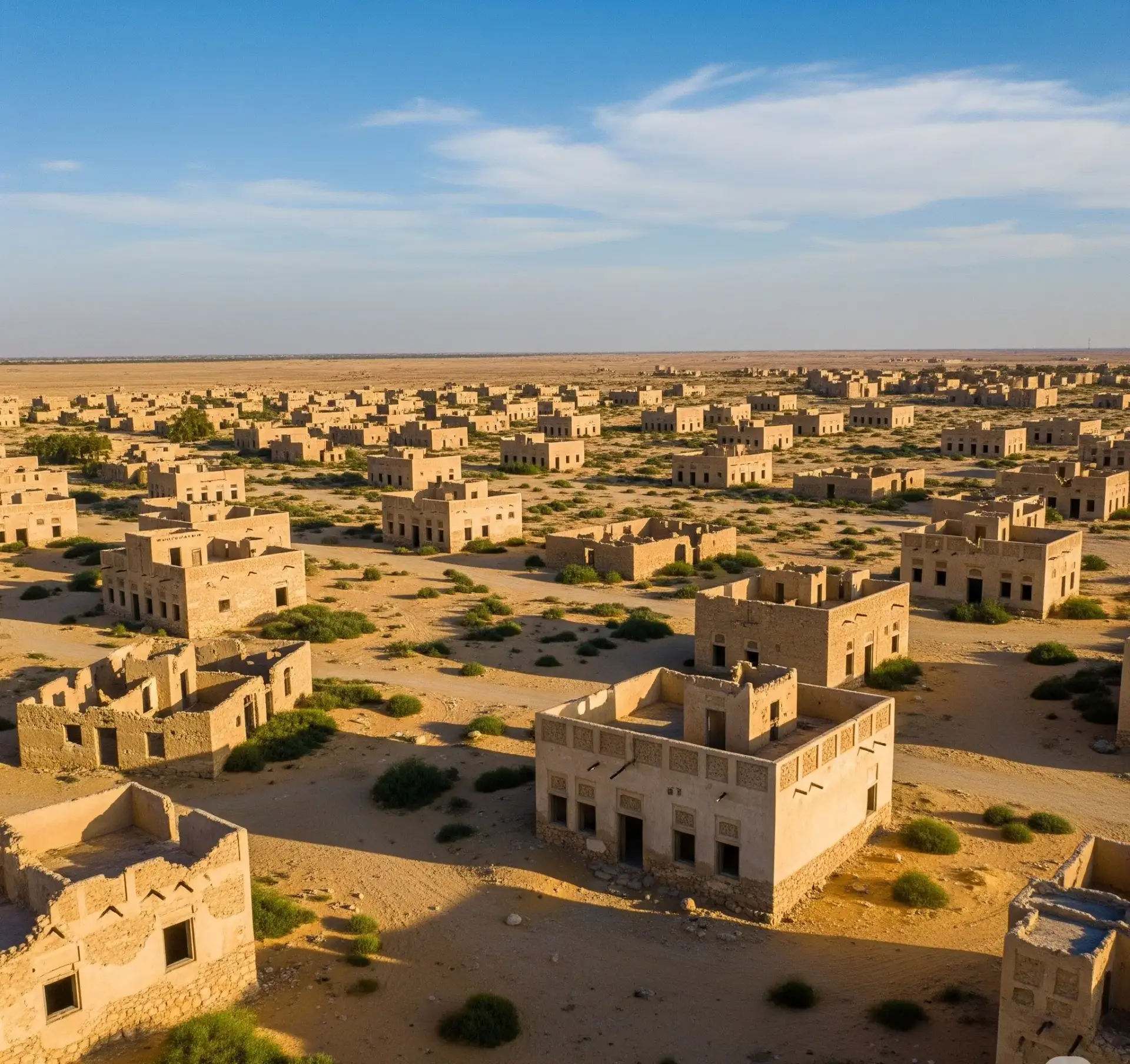
Just 20 minutes from Ras Al Khaimah’s glittering waterfront lies Al Jazirah Al Hamra, a village known today as the UAE’s most haunted and historically rich ghost town. Once a vibrant pearling settlement, this place now tells stories of prosperity, mystery, and sudden silence. The haunting quiet of its streets and abandoned homes makes it a unique and rare destination, not just for thrill-seekers, but also for those who wish to connect with the UAE’s deep-rooted traditions.
While most parts of the UAE have undergone massive modernization, Al Jazirah Al Hamra remains frozen in time. Visitors often compare it to walking into a time capsule that has preserved the essence of life before oil transformed the Emirates. With legends of jinn, economic downfall, tribal migration, and natural decay, the village is much more than just ruins — it’s a living museum without a roof.
Origins: The Pearl Diving Village
The village dates back to the 14th century and is one of the few coastal settlements in the region that remained continuously inhabited until the mid-20th century. Strategically located near rich pearling banks, Al Jazirah Al Hamra thrived for centuries on the pearl trade. The Gulf’s warm, shallow waters made it ideal for natural pearl harvesting, and by the 18th and 19th centuries, the village became an essential hub for divers, traders, and craftsmen.
Nearly every family was connected to the sea — either directly as divers, boat makers, or merchants. Dhow ships lined the shores, and the market area buzzed with negotiations as pearls changed hands. The social structure was tightly knit, with clear hierarchies between merchants and laborers. The souqs were small but efficient, often bustling with activity before the sun reached its peak.
Records from British explorers and Gulf historians mention the village as being prosperous and self-reliant. It had its own wells, mosques, majlis (gathering places), and schools where children learned Quranic verses alongside arithmetic and navigation.
The Great Abandonment

The fall of Al Jazirah Al Hamra is as dramatic as its rise. The 1960s brought rapid change across the Emirates. With the pearling industry collapsing due to the invention of cultured pearls by the Japanese and the discovery of oil in Abu Dhabi, traditional communities faced tough choices. The economic base of the village eroded swiftly, pushing families to seek new livelihoods in emerging cities.
But Al Jazirah Al Hamra’s abandonment wasn’t just economic. Oral history indicates growing political friction between the resident Zaab tribe and local rulers. While not well-documented in written sources, stories from elders suggest that an entire tribe relocated overnight, possibly in protest or exile. It is this suddenness that adds to the village’s eerie allure — it was not a slow decline, but a mysterious and collective departure.
Even today, personal belongings, traditional wooden chests, and kitchenware lie scattered in some homes, giving the feeling that people just walked out and never returned.
Unique Architecture
Unlike many reconstructed heritage sites, Al Jazirah Al Hamra’s buildings are original and untouched, allowing visitors a raw view into Emirati life before modernization. The architecture is both functional and poetic — designed to withstand harsh desert climates while reflecting artistic and social values.
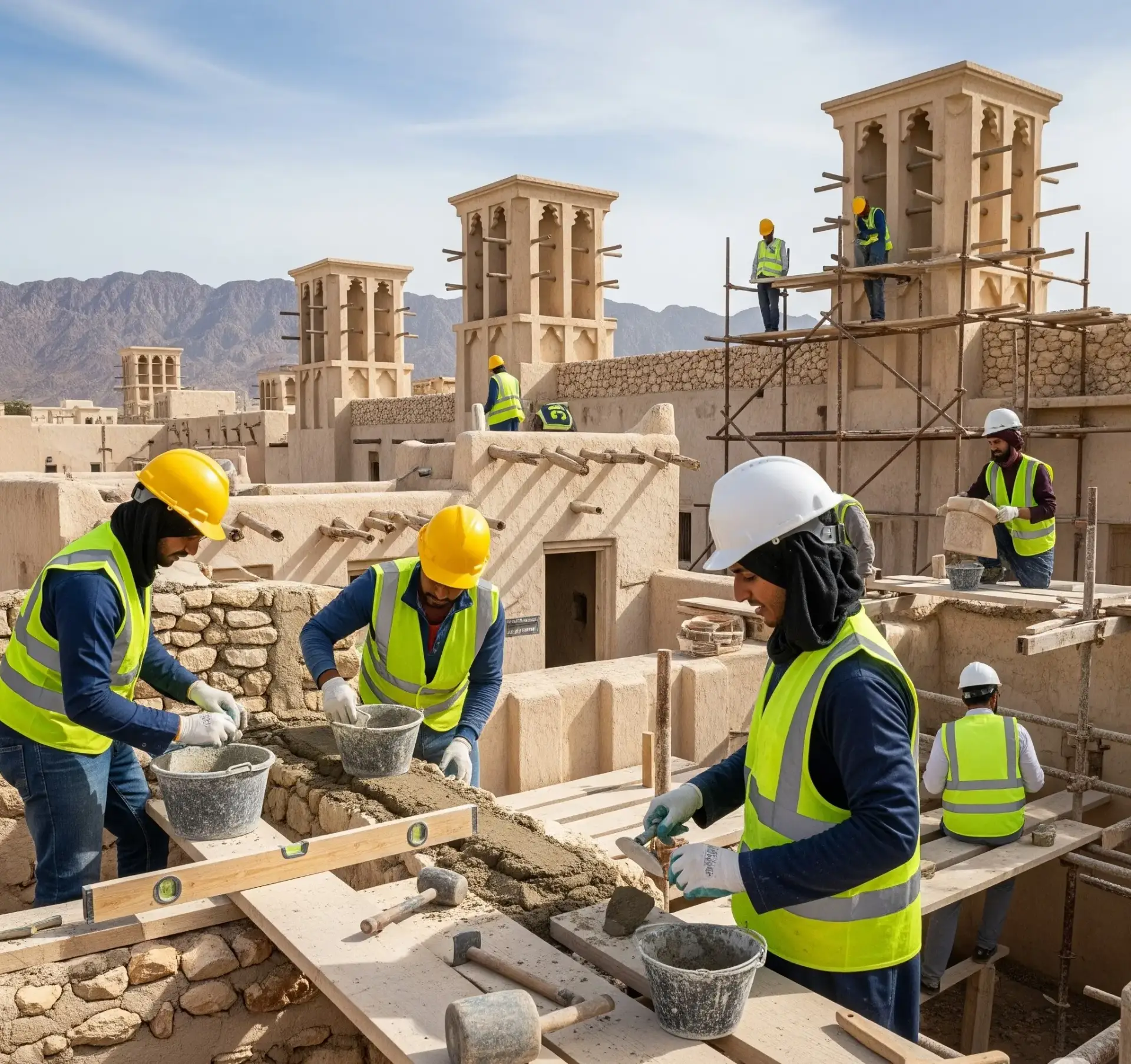
Most buildings are constructed using fossilized coral stone bonded with lime-based mortar. Mangrove poles supported roofs, and gypsum was used to add intricate detailing and plaster. Walls are thick to retain coolness and resist heat. Barjeel, or traditional wind towers, are the most iconic feature — designed to funnel cool breezes into homes, an ingenious method of natural air conditioning.
Narrow alleyways allowed for shade, while homes were often constructed around small courtyards, giving families privacy and communal space. The difference in structure sizes also highlighted social status — larger homes with ornate facades belonged to pearl merchants, while more humble dwellings housed divers and laborers.
Ghost Stories

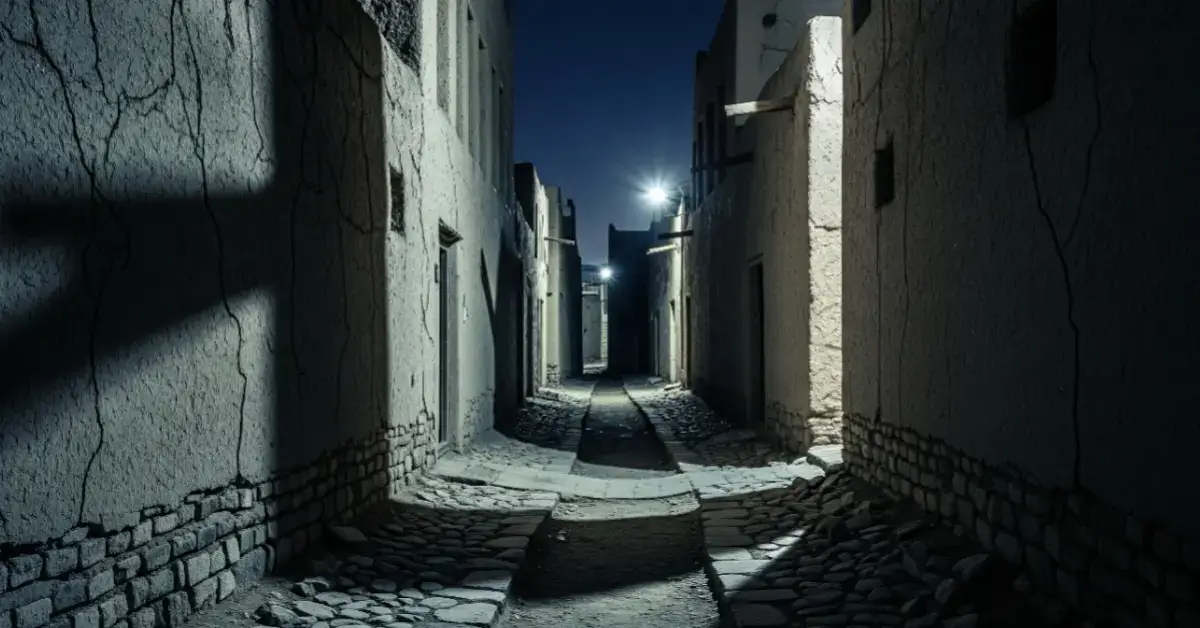
The haunting tales of Al Jazirah Al Hamra have become part of UAE’s cultural folklore. Locals claim that jinn — supernatural beings from Islamic mythology — inhabit the deserted buildings. Visitors have reported whispers in the wind, doors creaking without wind, and unexplained lights flickering in the darkness.
One popular legend is of a crying baby heard near a former maternity area — a sound that continues even though the building has been uninhabited for decades. Another tale involves shadowy figures spotted in photographs, particularly near the old mosque and merchant houses.
Paranormal investigators from abroad have even visited the village, with some documenting strange energy readings. Whether one believes in spirits or not, there’s no denying the atmospheric tension in the air as dusk falls over the crumbling structures.
Interestingly, these legends also serve a protective role. In the past, such stories discouraged children and looters from entering fragile structures and helped preserve the site indirectly.
Modern Status & Tourism
Despite its decay, Al Jazirah Al Hamra has not been forgotten. In the last decade, there has been a push to recognize its cultural value. The Ras Al Khaimah Tourism Development Authority has initiated projects to stabilize some of the endangered buildings and make the village safer for visitors without disturbing its authenticity.
Today, Al Jazirah Al Hamra hosts cultural festivals, film shoots, art installations, and educational tours. Filmmakers often use it as a backdrop due to its cinematic look, and photographers are drawn to its textures, light, and emptiness. The annual Ras Al Khaimah Fine Arts Festival frequently uses the village as a venue, blending contemporary art with heritage.
It has also been proposed as a UNESCO World Heritage Site candidate, although the process is ongoing. Local schools occasionally organize field trips, offering students a chance to learn history outside the classroom.
Visiting Al Jazirah Al Hamra
- Best Time: Visit early in the morning or during golden hour (just before sunset) for best lighting and cooler temperatures.
- Entry: Free, but there are no ticket counters or visitor centers as of 2025.
- Accessibility: Most parts are walkable, but uneven ground makes it difficult for wheelchairs or strollers.
- What to Bring: Water, sunblock, hat, sturdy shoes, and a camera.
- Etiquette: Don’t enter buildings marked as unsafe. Avoid vandalism and leave no trash behind.
- Travel Tip: Combine your visit with other nearby attractions like the National Museum of Ras Al Khaimah or the Suwaidi Pearl Farm.
Frequently Asked Questions (FAQs)
Is Al Jazirah Al Hamra open to the public?
Yes, it is open for visitors year-round. There is no entry fee as of 2025, but caution is advised as some structures are unstable.
How do I reach Al Jazirah Al Hamra from Dubai?
It’s about a 1-hour drive via E311 or E611 highways toward Ras Al Khaimah. You can use Google Maps to locate “Al Jazirah Al Hamra Heritage Village.”
Are there guided tours available?
Yes, especially during festivals or school holidays. You can also contact the Ras Al Khaimah Tourism Authority for updates.
Is the site safe to explore alone?
Generally yes during daylight hours, but visitors are advised not to enter buildings that are visibly unstable or marked off.
Can I take photos or use drones?
Photography is allowed and encouraged. Drone use may require prior permission, especially during public events.
Related Articles on Woorely
- Lost Pearl Diving Villages of the UAE
- Dubai’s Secret Underground Tunnels
- How to Get a UAE Driving License
- How to Check UAE Visa Status
Conclusion
Al Jazirah Al Hamra stands as a rare testament to the UAE’s pre-oil era. It is a place where history, architecture, economy, and myth converge to tell a story of resilience, ingenuity, and transformation. While skyscrapers, malls, and highways symbolize today’s Emirates, Al Jazirah Al Hamra offers a deeper, slower narrative — one etched in coral stone and desert winds.
Whether you’re an explorer, a history buff, or someone curious about how the past shaped the modern Gulf, this ghost village offers an unforgettable window into the heritage of the UAE.


